
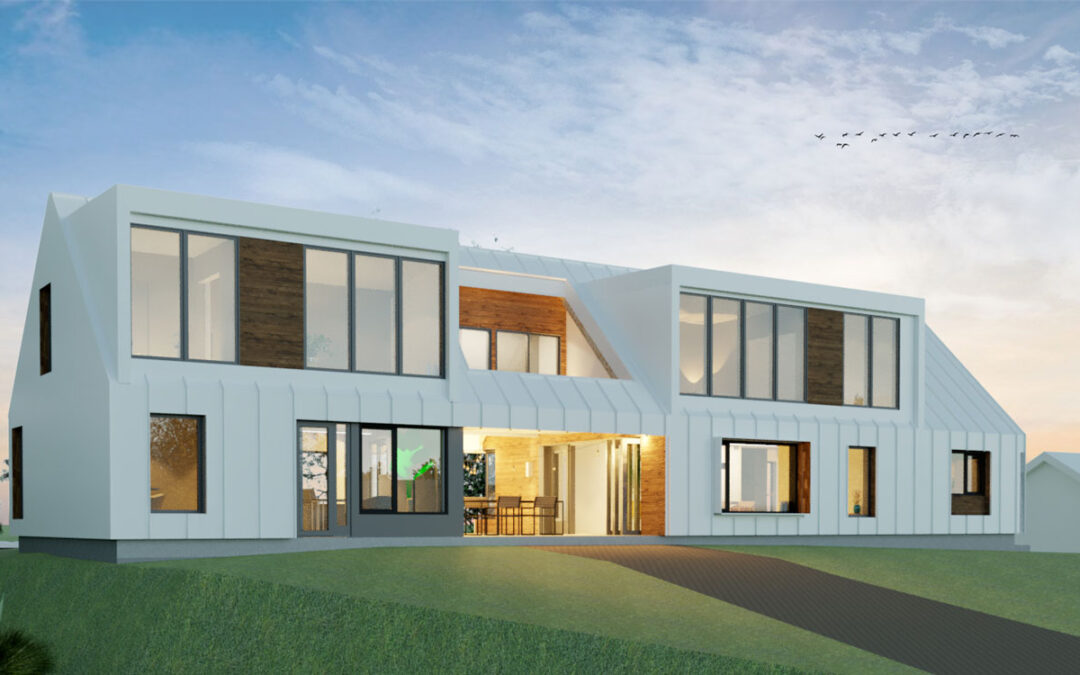

Why Ottawa Homeowners Are Rebuilding Instead of Renovating in 2026
There comes a point in certain renovations where the numbers stop making sense.
The walls are already open. The electrical needs replacing. The floor levels don’t align between the original structure and the addition built twenty years later. The insulation is inconsistent. The basement ceiling is too low. Every contractor walking through the house says some version of the same thing: “we can make it work,” but nobody sounds convinced that it will work well.
For a growing number of Ottawa homeowners in 2026, especially in neighbourhoods like Westboro, the Glebe, Alta Vista, Old Ottawa South, and Rockcliffe Park, that moment is leading to a different conclusion entirely. Instead of continuing to patch, extend, and compromise around an aging structure, they’re choosing to rebuild from the ground up.
Not because they want more house. Because they want a better one.
The Renovation Ceiling Most Ottawa Homes Eventually Hit
Ottawa has some of the most established residential neighbourhoods in Canada. That’s part of the appeal. Mature trees, walkable streets, schools people specifically move for, and lots that were planned long before suburban density became standard.
But many of the homes sitting on those lots were built for a completely different way of living.
Kitchens were smaller because families didn’t gather there the way they do now. Ceiling heights were lower. Natural light wasn’t prioritized. Mechanical systems were designed around another era of energy use and another understanding of comfort. Storage was minimal. Bathrooms were often treated as purely functional spaces rather than integrated parts of daily life.
What begins as a renovation in these homes often turns into a chain reaction. One improvement exposes another issue. A new addition highlights how inefficient the original structure is. A modern kitchen feels disconnected from the rest of the house. The upgraded spaces work harder while the existing house continues underperforming around them.
This is where many Ottawa homeowners begin seriously considering custom residential architecture instead of another renovation cycle.
The Value of Staying in the Right Neighbourhood
One of the biggest reasons rebuild projects are increasing across Ottawa in 2026 is simple: people don’t actually want to leave where they live.
They want better architecture. Better layouts. Better performance. Better natural light. But they don’t want to lose their street, their school district, their commute, or the neighbourhood they’ve already built a life around.
In older Ottawa neighbourhoods, the lot itself is often more valuable than the existing structure sitting on it.
A custom home rebuild allows homeowners to keep everything they already love about their location while replacing the part that no longer serves them properly. Instead of searching the resale market for a home that almost works, they create one designed specifically around how they live now.
For many families, rebuilding becomes less about luxury and more about long-term logic.
What a Rebuild Allows That Renovations Usually Can’t
There are limits to what architecture can do inside an existing structure. Good architects can work intelligently within constraints, but some constraints fundamentally shape the quality of the result.
A rebuild removes those limitations.
It allows the home to be positioned correctly on the lot for light, privacy, and landscape connection. It allows ceiling heights, circulation, and room proportions to be designed cohesively from the beginning. It allows the structure, insulation, glazing systems, and mechanical systems to function together as a single integrated strategy rather than disconnected upgrades layered over time.
Most importantly, it allows the home to reflect contemporary living patterns instead of adapting outdated ones.
Ottawa homeowners today want kitchens that connect naturally to outdoor spaces. They want home offices with real acoustic separation and daylight. They want mudrooms that actually function through winter. They want spaces that feel calm rather than crowded. They want homes that perform efficiently during Ottawa winters without drafts, cold spots, or constantly fluctuating temperatures.
Those things are significantly easier to achieve when the architecture starts from zero rather than compromise.
Modern Ottawa Homes Are Becoming More Site-Specific
One of the strongest trends emerging in Ottawa residential architecture in 2026 is the move away from generic luxury design toward homes that feel deeply connected to their specific site.
The best custom homes being built in Ottawa right now don’t feel imported from somewhere else. They respond directly to the climate, the neighbourhood, and the lot itself.
A narrow urban lot in Hintonburg requires a completely different architectural approach than a property in Manotick or a mature lot in Rockcliffe Park. The architecture changes with the conditions.
That sensitivity is part of what separates thoughtful custom residential design from speculative construction. The goal isn’t simply to maximize square footage. It’s to create a home that feels natural where it exists.
That might mean carefully framing views toward mature trees. It might mean shaping the roofline to bring southern light deeper into the interior during winter. It might mean designing exterior materials that age well within Ottawa’s climate rather than deteriorating after a few freeze-thaw cycles.
Good architecture feels inevitable once it’s built, as though the house always belonged exactly there.
The Financial Logic Has Changed
There was a time when rebuilding in Ottawa was viewed primarily as a luxury decision. In 2026, the economics are more nuanced.
The cost of major renovations has increased substantially over the last several years. Labour, materials, permitting complexity, and unforeseen structural conditions have made large-scale renovations less financially predictable than they once were.
At the same time, the long-term value of high-quality custom homes in Ottawa’s established neighbourhoods has remained extremely strong.
When homeowners compare the cost of a deep renovation against a rebuild that delivers significantly better performance, layout quality, durability, and resale value, the rebuild conversation becomes much easier to justify.
Especially when the result is a home designed to serve the next twenty or thirty years of life rather than temporarily solving today’s problems.
Architecture That Anticipates How Life Changes
The most successful custom homes in Ottawa are rarely designed only for present needs. They’re designed for change.
Families evolve. Children grow older. Work patterns shift. Parents age. Daily routines transform over time. Architecture that only solves for one exact phase of life tends to age poorly.
This is another reason thoughtful custom residential architecture matters. Good architects think about flexibility from the beginning. Spaces that can transition over time. Floor plans that adapt without requiring major reconstruction later. Homes that continue feeling functional and calm even as life changes around them.
The difference between a house that merely looks impressive and one that genuinely supports life well over decades usually comes down to this level of foresight.
The Ottawa Architecture Conversation Is Changing
For a long time, residential architecture in Ottawa was discussed mostly in terms of finishes and square footage. Granite countertops. Larger islands. More open concept. Bigger primary suites.
That conversation is shifting.
Homeowners are becoming more sophisticated about design. They’re thinking about proportion, natural light, sustainability, energy performance, material longevity, and how architecture affects the quality of daily life.
They’re asking better questions now.
Not “how big can we build?” but “how well can this home work?”
That’s ultimately what good custom architecture delivers. Not excess. Precision. A home that feels considered from every angle because it was designed intentionally rather than assembled generically.
If you’re considering a custom home, rebuild, or contemporary residential renovation in Ottawa, 258 Architecture approaches every project through that lens: thoughtful design, modern performance, and architecture built around how people actually live. The conversation starts with the site, the lifestyle, and the possibilities already waiting there.